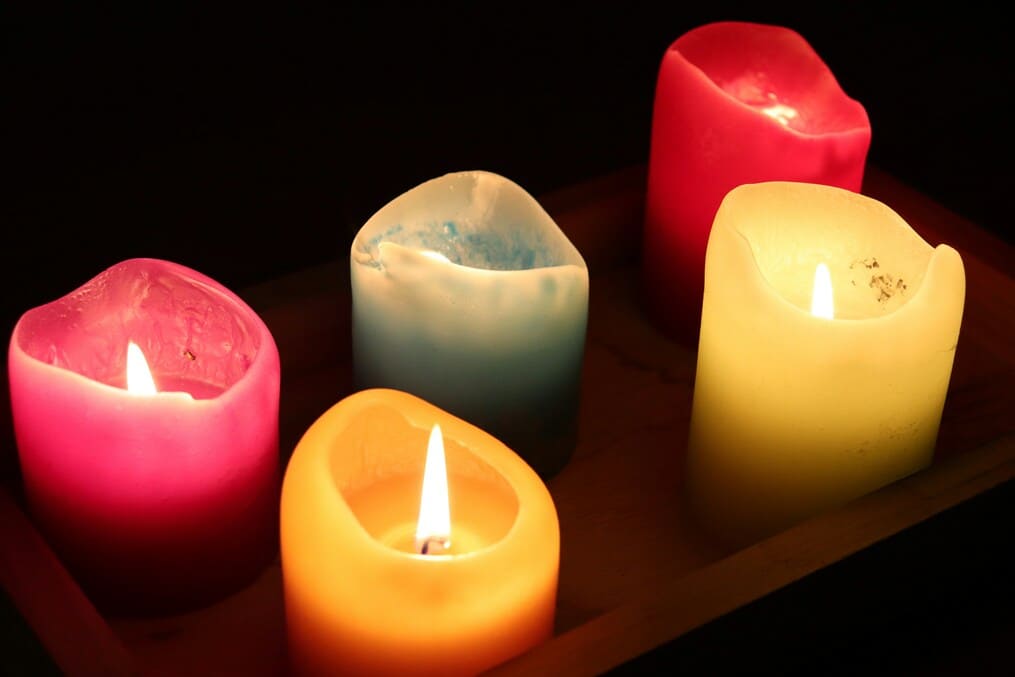
Candle Flame Meanings: Have you ever lit a candle during prayer, meditation, or a spiritual practice and noticed that its flame behaved in an unusual way? Perhaps it stood tall and steady, flickered repeatedly, appeared unusually small, or moved from side to side.
For people who include candles in spiritual traditions, these observations can carry symbolic meaning. A candle flame may be interpreted as a representation of focus, hope, prayer, emotional energy, or the progress of a personal intention.
Across different cultures, candles have played important roles in religious ceremonies, remembrance, folk traditions, and spiritual practices. Their light has been associated with guidance, devotion, purification and the presence of something sacred.
However, candle flame interpretations are not universal. A tall flame does not have one established spiritual meaning across every tradition, and a flickering candle does not prove that a supernatural event is taking place.
In this guide, we explore common traditional interpretations of candle flames, what different flame behaviours may symbolise, the cultural background of candle symbolism, and the practical reasons a flame may change.
Whether you are researching candle rituals, exploring spiritual symbolism or simply curious about the meaning people attach to candle flames, this article will help you understand the subject more clearly.
1. What Do Candle Flames Symbolise in Spiritual Practices?
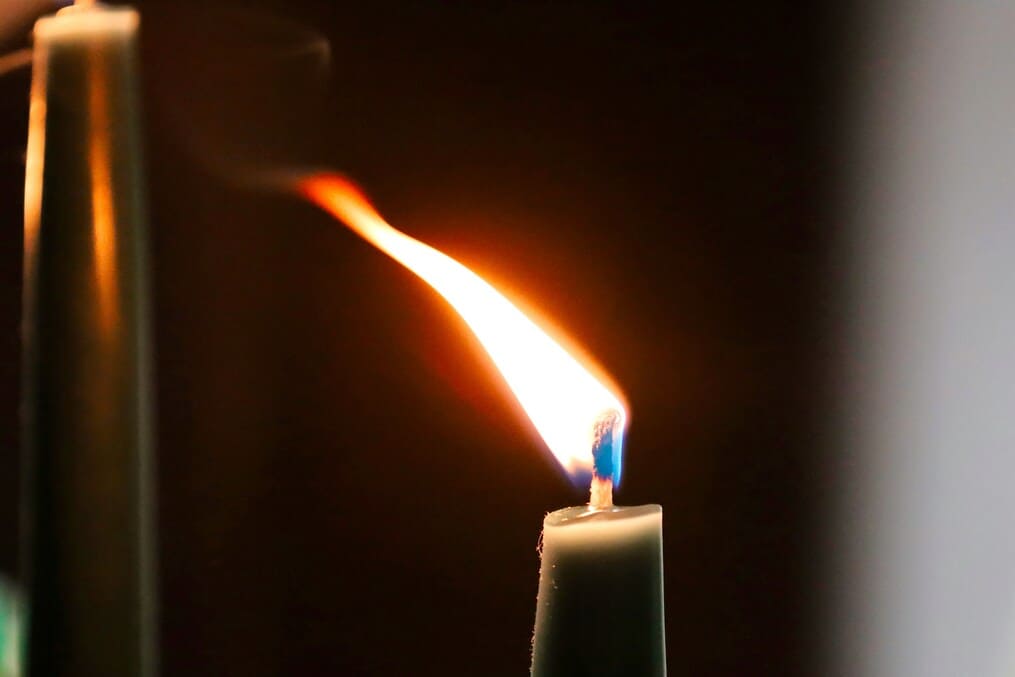
A candle flame is often understood as a symbol of light, hope, prayer, and intention.
In different religious and folk traditions, lighting a candle can represent remembrance, devotion, guidance, purification or a personal request. The flame provides a visible focus for an otherwise invisible thought, prayer, or feeling.
Some contemporary candle practitioners also interpret the way a flame burns as symbolic feedback during a ritual.
For example, they may associate:
- A steady flame with focus and stability.
- A tall flame with strength or enthusiasm.
- A small flame with patience or a need to reconsider an intention.
- A flickering flame with movement or uncertainty.
- A dancing flame with change or activity.
- A candle that goes out unexpectedly with interruption or the need to pause.
These are examples of interpretations found in some contemporary spiritual discussions. They should not be treated as universal rules or scientifically established messages.
A candle’s physical behaviour is also affected by its wick, wax, airflow, temperature, and surroundings. Understanding both the symbolic and practical explanations gives a more balanced perspective.
2. A Brief History of Candle Flame Symbolism
Candles have served practical and symbolic purposes for centuries. Before modern electric lighting, they provided illumination in homes, religious buildings, and public spaces.
Their use gradually became connected with a variety of cultural and religious practices.
In Christian traditions, candlelight can symbolise divine light, prayer, hope and remembrance. Candles are used during worship and in ceremonies marking important religious occasions.
In some Jewish traditions, candles have important roles in Sabbath observance and festivals. Their lighting is connected with religious practice, family life and sacred time.
In various folk traditions, candles have also been used in offerings, remembrance, purification, and forms of divination.
A useful historical discussion is provided by Encyclopaedia Iranica in its article on candles in Persian culture and tradition. It describes the use of candles in religious settings, folklore, and symbolic practices.
Research by Irina Sedakova, published in The Ritual Year, also explores the magico-religious symbolism of candles in Slavic calendar rituals. The research discusses how candlelight has been associated with life, death, purification, commemoration, and ritual activity.
These examples demonstrate that candle symbolism developed in different cultural settings. It would therefore be inaccurate to assume that all candle interpretations come from one spiritual tradition.
3. What Does a Tall Candle Flame Mean?
A tall candle flame is commonly associated in contemporary candle symbolism with strength, determination, enthusiasm, and a strong intention.
Some spiritual practitioners interpret a tall flame as a positive symbolic sign, particularly when the candle is being used during prayer, meditation, or a personal ritual.
Depending on the practitioner’s beliefs, it may represent:
- Strong focus on an intention.
- Confidence and determination.
- Hope and encouragement.
- A sense of spiritual commitment.
- Positive movement towards a personal goal.
However, a tall flame does not prove that a ritual is working or that a particular outcome is approaching.
There are also ordinary physical reasons why a candle may produce a taller flame. A wick that is too long, excess fuel around the wick, or a particular wax formulation can affect the flame’s size.
If a flame becomes excessively tall, trim the wick according to the candle manufacturer’s instructions after extinguishing and cooling the candle. Stop using a candle that burns dangerously or produces excessive smoke.
4. What Does a Small or Weak Candle Flame Mean?
A small flame is sometimes interpreted symbolically as a reminder to be patient, review an intention, or recognise that progress may take time.
In some contemporary spiritual interpretations, a weak flame may represent:
- Uncertainty.
- Hesitation.
- A need for patience.
- Emotional tiredness.
- A period of reflection.
- The importance of reconsidering a personal goal.
These interpretations are symbolic rather than proven messages.
A weak flame may also have a straightforward physical explanation. The wick may be too short, the candle may be poorly manufactured, the wick may be struggling to draw wax, or the candle may be affected by airflow.
If the flame repeatedly struggles, goes out, or produces excessive smoke, extinguish the candle safely rather than assuming that the behaviour has a supernatural explanation.
5. What Does a Flickering Candle Flame Mean?
A flickering flame is one of the most commonly discussed subjects in candle interpretation.
In some spiritual practices, repeated flickering is associated symbolically with movement, changing circumstances, uncertainty, or activity surrounding an intention.
Depending on the tradition, people may interpret a flickering flame as representing:
- A period of change.
- Emotional uncertainty.
- The need to remain focused.
- A reminder to reflect before making a decision.
- Movement within a personal situation.
Some practitioners also associate flickering with the presence of spiritual activity. This is a matter of personal belief, not something that can be established by observing a flame.
Before interpreting a flickering candle spiritually, check its surroundings.
Common physical causes include:
- Open windows.
- Fans and air-conditioning.
- Movement in the room.
- Uneven wick length.
- Air currents from doors.
- Changes in the candle’s position.
A candle may flicker even when the movement of air is too subtle to notice.
6. What Does a Dancing Candle Flame Mean?
A dancing candle flame moves repeatedly from side to side or appears to sway while burning.
In some contemporary spiritual interpretations, this behaviour is associated with activity, movement, changing energy, or a situation that requires attention.
People may attach different symbolic meanings to a dancing flame, including:
Movement and Change
Some practitioners interpret a dancing flame as a symbol of change or movement in an area of life.
Emotional Activity
Others associate it with strong emotions, particularly when a candle is lit during a personal reflection or relationship-focused ritual.
A Reminder to Stay Focused
A dancing flame may also be used as a symbolic reminder to remain patient and attentive to an intention.
However, the physical explanation should always be considered. A dancing flame is commonly caused by changing airflow, drafts, or the movement of warm air around the wick.
It is not reliable evidence that another person is thinking about you, that a spell is succeeding, or that a supernatural presence is nearby.
7. What Does a Candle Flame That Burns Steadily Mean?
A steady flame is often viewed positively in spiritual candle symbolism.
Because it burns without noticeable movement, some practitioners associate it with calmness, consistency, concentration, and stability.
Common symbolic interpretations include:
- A clear intention.
- Patience and determination.
- Emotional balance.
- Consistency in prayer.
- A sense of peace.
- Confidence in a personal decision.
A steady flame can also make it easier to concentrate during meditation or prayer.
From a practical perspective, a candle that burns steadily may simply have a properly sized wick and be positioned away from drafts.
8. What Does a Candle Flame That Goes Out Unexpectedly Mean?
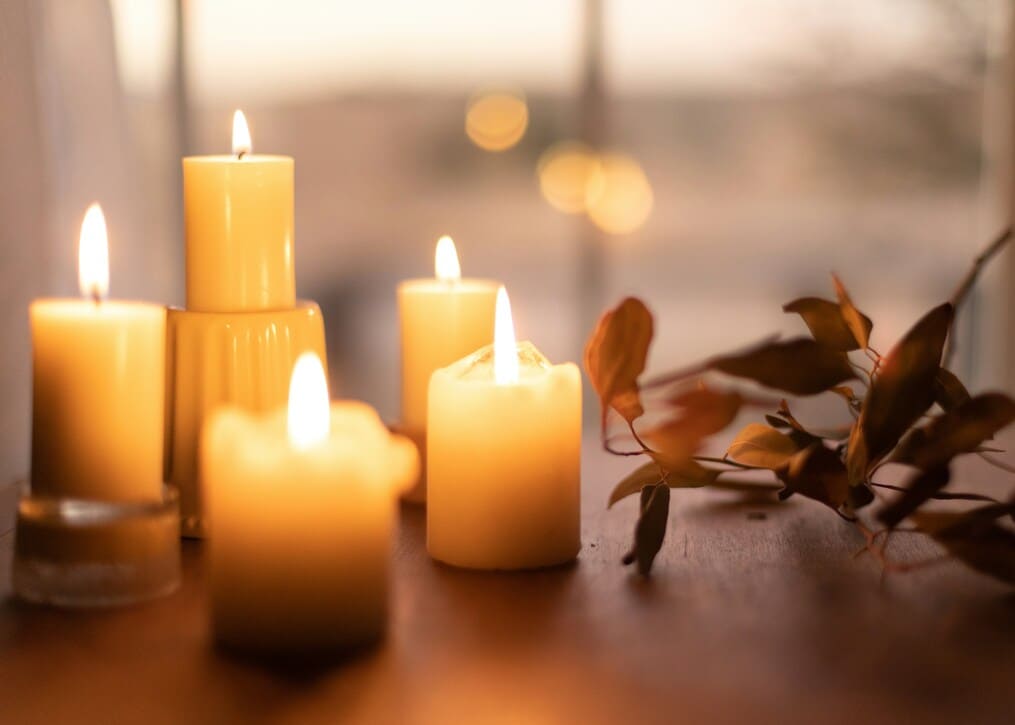
When a candle goes out unexpectedly, people may attach different meanings to the event depending on their beliefs and spiritual tradition.
Some contemporary practitioners interpret it symbolically as an interruption, a reason to pause, or a reminder to reconsider an intention.
Others may simply regard it as an ordinary interruption in the burning process.
Possible physical causes include:
- A draft or sudden movement of air.
- A wick that is too short.
- A wick that has become submerged in melted wax.
- Poor candle quality.
- An uneven burning surface.
- An unsuitable candle holder.
A candle going out does not prove that someone has interfered with your spiritual practice or that your intention has been rejected.
If the candle goes out repeatedly, investigate the physical cause. Do not repeatedly relight a candle that is damaged, overheating, or otherwise unsafe.
9. What Does a Candle Flame That Produces Smoke Mean?
Smoke is sometimes discussed in spiritual candle interpretation, particularly in traditions where candles are used during prayers, petitions, or symbolic cleansing.
Some contemporary practitioners associate smoke with release, transformation, or the movement of an intention.
However, smoke is primarily a physical result of incomplete combustion or the burning of materials in and around the wick.
Possible causes include:
- A wick that is too long.
- Poor-quality wax.
- Fragrance or additives.
- A draft disturbing combustion.
- A wick that has accumulated carbon.
- Contaminants in the candle.
Excessive smoke should not be ignored. Extinguish the candle safely, ventilate the room, and avoid inhaling the smoke.
Never burn unidentified herbs, oils, or other materials in an attempt to create a particular spiritual effect.
10. What Does a Candle Flame That Produces a Blue Colour Mean?
A blue-looking region near the base of a flame can sometimes be observed during ordinary combustion.
Some folk beliefs attach spiritual meanings to unusual flame colours. For example, certain popular interpretations associate a blue flame with spiritual presence or unusual activity.
However, flame colour is influenced by combustion conditions, temperature, chemical elements, and the materials being burned.
A blue region near a candle wick is not proof of a spirit, supernatural communication, or spiritual intervention.
It is useful to distinguish candle-colour symbolism from the actual colour of a burning flame. If you want to understand the traditional meanings assigned to different candle colours, read our guide to candle magic colours and their traditional meanings.
11. What Does a Candle Flame That Burns Very Quickly Mean?
Some people notice that their candle burns faster than expected and wonder whether the behaviour carries a spiritual meaning.
In contemporary candle discussions, rapid burning is sometimes interpreted as urgency, intensity, or quick movement towards an intention.
However, a candle’s burning speed depends on several physical factors.
These include:
- Candle size and shape.
- Wax composition.
- Wick thickness.
- Wick material.
- Room temperature.
- Air movement.
- The candle’s manufacturing quality.
A candle that burns unusually quickly may have an unsuitable wick or a design that encourages faster melting.
If you are using candles as part of a personal ritual, it is better to observe the behaviour without treating it as a guaranteed prediction.
12. What Does a Candle That Burns Unevenly Mean?
An unevenly burning candle may leave one side of the wax higher than the other, produce a deep tunnel, or form an irregular pool of melted wax.
In some contemporary candle interpretations, uneven burning is associated symbolically with obstacles, imbalance, or a situation requiring patience.
These meanings vary between practitioners.
There are also ordinary reasons for uneven burning:
- The candle is positioned on an uneven surface.
- Airflow affects one side more than the other.
- The wick is off-centre.
- The wax is not melting evenly.
- The candle has manufacturing defects.
If the candle develops a deep tunnel, excessive heat, or an unstable flame, follow the manufacturer’s safety instructions and discontinue use if necessary.
13. What Does a Candle Flame Mean During Love Rituals?
Candles are frequently used in contemporary love-focused spiritual practices as symbols of affection, hope, harmony, and emotional intention.
Some practitioners observe the flame while reflecting on relationships or expressing personal wishes.
Within these practices, a steady flame may be interpreted as a symbol of patience and emotional stability, while a flickering flame may be associated with uncertainty or changing circumstances.
However, candle behaviour cannot reveal another person’s private thoughts or establish whether they will return to a relationship.
Love involves personal choice, communication, and mutual consent. A candle ritual should never be presented as a way to control someone’s feelings.
If you are exploring the symbolism of love-related spiritual practices, you may also read our articles on candle love spells and reconciliation after a long separation.
These subjects have different purposes: candle flame symbolism focuses on interpreting the flame, while love-spell content explores the traditions and symbolism associated with relationship intentions.
14. Candle Flames in Spiritual Cleansing and Uncrossing Practices
Candles are also used in some spiritual cleansing and uncrossing practices.
In these settings, the flame may symbolise prayer, purification, hope, or the intention to move beyond a difficult period.
Some practitioners observe how a candle burns and attach personal or traditional meanings to its behaviour.
For example, a steady flame may be understood as a symbol of calmness, while an irregular flame may encourage reflection.
However, a candle cannot establish that a person is cursed, spiritually crossed, or affected by another person’s actions.
If you are researching these practices, read our guide to uncrossing rituals and their traditional meaning.
You can also explore spiritual cleansing for relationships to understand how symbolic cleansing practices are discussed in relationship-focused spiritual contexts.
15. How to Observe a Candle Flame During a Spiritual Practice
If you include candles in prayer, meditation, or personal spiritual reflection, observing the flame can be a simple way to focus your attention.
You do not need to treat every movement as a message or prediction.
Consider the following approach:
Step 1: Choose a Suitable Candle
Use a good-quality candle that is designed for safe indoor use. Check the manufacturer’s instructions and place it in a suitable holder.
Step 2: Prepare a Safe Environment
Keep the candle away from curtains, paper, clothing, pets, and other flammable materials.
Ensure that it is positioned on a stable, heat-resistant surface.
Step 3: Set a Personal Intention
If you are praying or meditating, take a moment to consider what you want to reflect on.
Your intention might involve peace, patience, gratitude, personal growth, or a fresh beginning.
Step 4: Observe Without Making Immediate Assumptions
Notice whether the flame is steady, flickering, or moving.
You can reflect on the symbolic meanings associated with these behaviours, but remember that ordinary physical conditions may explain them.
Step 5: Record Your Observations
Some people find it useful to keep a journal of their reflections.
You might record the date, type of candle, purpose of the practice, and any observations.
This can help you understand your own thoughts and experiences without relying on unsupported predictions.
Step 6: Extinguish the Candle Safely
Never leave a burning candle unattended. Extinguish it according to the manufacturer’s guidance and ensure the flame is completely out before leaving the room.
16. What Is the Difference Between Candle Flame Meanings and Candle Colour Meanings?
Candle flame meanings and candle colour meanings are related subjects, but they focus on different aspects of candle symbolism.
Candle colour meanings explore the symbolic associations assigned to the colour of the candle before it is lit.
Candle flame meanings explore the symbolic interpretations associated with the flame’s appearance and burning behaviour.
| Candle colour meanings | Candle flame meanings |
|---|---|
| Focus on the candle’s colour | Focus on the behaviour of the flame |
| Often associated with intention and symbolism | Often associated with burning patterns and symbolic interpretation |
| Examples include white, red, green and blue candles | Examples include steady, tall, weak and flickering flames |
| Colour associations vary between traditions | Flame interpretations also vary between traditions |
For a detailed explanation of the first subject, read candle magic colours and their traditional meanings.
Keeping these topics separate allows readers to find the information they are looking for without confusing two different areas of candle symbolism.
17. Why You Should Not Depend on Candle Flames to Predict the Future
Candle interpretation can be an interesting part of spiritual symbolism, but it should not become the only basis for important decisions.
A flickering flame cannot reliably tell you whether a relationship will succeed, whether a business will make money or whether another person is planning something against you.
Similarly, a tall flame does not guarantee success, and a weak flame does not mean that something negative is going to happen.
When interpreting candle behaviour, keep these principles in mind:
- Consider physical explanations before concluding.
- Avoid fear-based interpretations.
- Do not make financial or relationship decisions based only on a flame.
- Do not allow anyone to frighten you into purchasing spiritual services.
- Seek appropriate professional help when facing serious personal problems.
Spiritual practices should support personal reflection and wellbeing, not create unnecessary anxiety.
18. Frequently Asked Questions About Candle Flame Meanings
1. What does a tall candle flame mean spiritually?
Some contemporary spiritual interpretations associate a tall candle flame with strength, determination, confidence, or a strong intention. However, these meanings are not universal, and a tall flame can also result from a long wick or excess fuel.
2. What does a flickering candle flame mean spiritually?
A flickering flame is sometimes interpreted as a symbol of movement, uncertainty, or changing circumstances. However, drafts, fans, and other airflow conditions are common physical causes.
3. What does a steady candle flame mean?
A steady flame is commonly associated symbolically with calmness, stability, focus, and consistency. Physically, it may simply indicate that the candle is burning in a stable environment.
4. What does a weak candle flame mean?
Some practitioners interpret a weak flame as a symbol of patience, uncertainty, or the need for reflection. A short wick, poor candle quality, or an unsuitable burning environment can also cause a weak flame.
5. What does it mean when a candle goes out by itself?
Some people interpret an unexpectedly extinguished candle as a symbolic interruption or a reason to pause. However, drafts, wick problems, and other physical factors are common explanations.
6. What does a dancing candle flame mean?
A dancing flame is sometimes associated with movement, activity, or change in contemporary candle symbolism. It is frequently caused by moving air around the candle.
7. Does a blue candle flame mean a spirit is present?
No. A blue region in a flame is not reliable evidence of a spirit or supernatural presence. Flame colour can be influenced by combustion conditions and the materials being burned.
8. What does candle smoke mean spiritually?
Some practitioners interpret smoke as a symbol of release or transformation. However, smoke is also a physical product of combustion and may indicate that a candle is burning poorly.
9. Can candle flames predict the future?
There is no reliable scientific evidence that candle flames can predict future events. Interpretations should be treated as cultural or personal symbolism rather than dependable forecasts.
10. Are candle flame meanings the same in every tradition?
No. Interpretations vary between cultures, religious communities, and individual practitioners. There is no universal dictionary of candle flame meanings.
11. What does a candle flame mean during a love ritual?
Some practitioners associate a steady flame with emotional stability and a flickering flame with uncertainty. However, candle behaviour cannot establish another person’s feelings or predict the outcome of a relationship.
12. Is it safe to leave a candle burning during a spiritual ritual?
No. A burning candle should never be left unattended. Keep it away from flammable materials, children, and pets, and extinguish it safely before leaving the room.
19. Final Thoughts: Understanding the Symbolism of Candle Flames
Candle flames have attracted attention across different cultures, religious traditions, and spiritual practices for generations.
A tall flame may be interpreted as a symbol of strength, a steady flame as a representation of stability, and a flickering flame as a reminder of movement or uncertainty. These interpretations can be meaningful to people who include candles in prayer, meditation, or personal rituals.
However, candle behaviour also has ordinary physical explanations. Wick length, airflow, wax quality, and the candle’s surroundings all influence how a flame burns.
Understanding both sides allows you to explore candle symbolism without treating every unusual movement as a supernatural warning or prediction.
At Real Magic Spells, we believe that exploring spiritual traditions should involve knowledge, respect, and realistic expectations. Candle practices can provide a meaningful opportunity for reflection, but your personal wellbeing and informed decisions should always remain important.
Need Guidance With Candle and Spiritual Practices?
Whether you are exploring candle symbolism, spiritual cleansing, uncrossing traditions, or relationship-focused spiritual practices, understanding the available approaches is an important first step.
At Real Magic Spells, we welcome you to discuss your concerns and learn more about the spiritual guidance and services available.
Contact us today:
- WhatsApp: +27786430400
- Email: [email protected]
Every person’s circumstances are different. Contact us for a private discussion about your concerns and the guidance that may be appropriate for you.
Take the next step towards clarity and a fresh perspective. Get in touch with us today.
Further Reading and External References
- Candle – Encyclopaedia Iranica — historical and cultural discussion of candles in Persian traditions, religious practices and folklore.
- Magico-Religious Symbolism of a Candle in the Slavic Calendar Rituals – The Ritual Year — academic discussion of candle symbolism in Slavic folk and religious practices.
- Candle Lore and Magic – Rosemary Ellen Guiley — an overview of candle folklore and modern magical interpretations. Use as a supplementary reference for popular beliefs, not as scientific evidence.
- Feast of Our Lady of Candles in Folk Religiosity – Zdzisław Kupisiński — academic research on candle customs and folk religious symbolism.